
By: Ava Lenze & Abi Lenze

Every year, Southeast High School invites students from other countries to live with a host family in our district and experience American culture. This year that person is Hannah Thols, a student from just outside of Munich, Germany. Thols has expressed that there are many differences between life in Germany and life in America, but has made a great effort to connect with the people and lifestyles here.

To Thols, a difference between America and Germany is the amount of time students spend at school. Besides the typical academic day lasting seven hours compared to the five hours in Germany, she believes, “You guys enjoy spending more time at school. I feel like everything is at school”. School-sanctioned events, like sports games, theatre performances, and clubs, are incredibly popular among our students. Almost every day, students stay between one and four hours after school to attend these events. When it comes to watching sports at the school, basketball and football both have incredibly immersive student sections, following themes and making chants to show support for our teams. Germany’s sports are outside of school, and many students belong to a sport’s club. Due to the separation of sports and school, students do not get the opportunity to experience a student section, homecoming games, or senior nights with their sport teams. Thols has experienced this firsthand, playing basketball in both countries, as well as playing volleyball and running track in America.

Outside of school, Thols’ host family and agency has made an effort to help her explore the United States by going on frequent trips. Her family has taken her to Miami, and her agency has taken her to New York, Cincinnati, and to see Niagara Falls. In comparison while in Germany, Thols’ friends and family are able to spend time in other countries during breaks. For them, a once and a lifetime opportunity of seeing another country is like seeing another state for most students in America. Living close to Munich has allowed her and her friends to visit Octoberfest, and travel into the city on various forms of public transportation to spend time together over weekends.
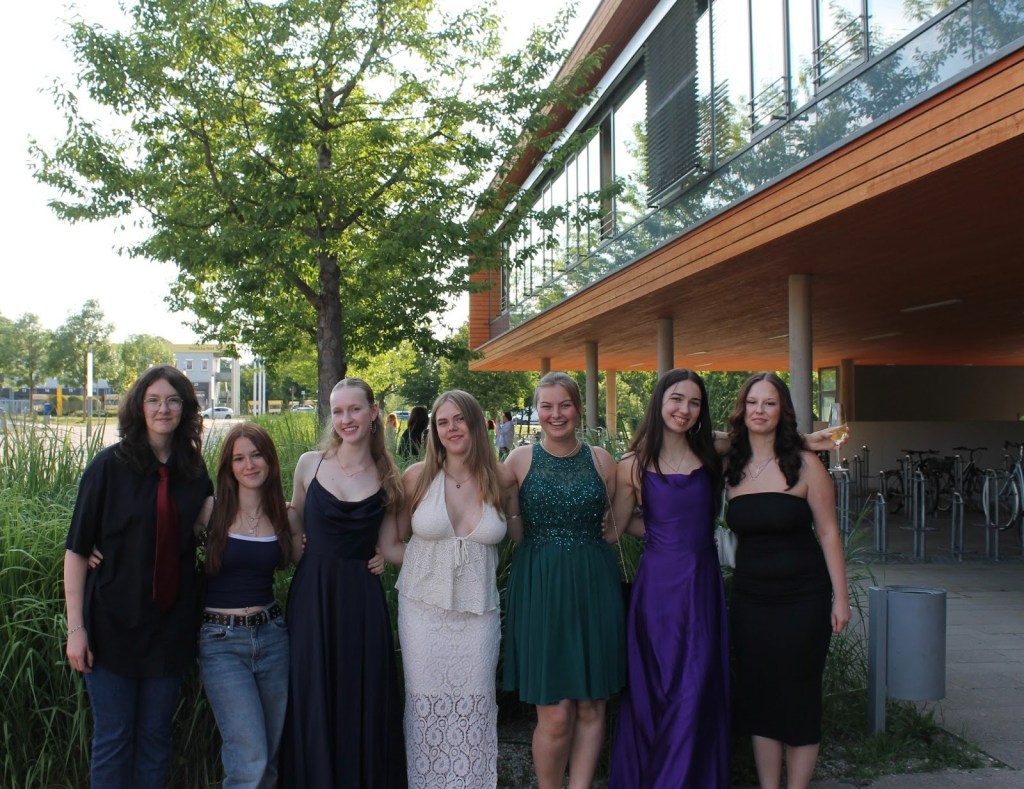
The differences between peer hangouts largely strive from the different age requirements in America compared to Germany. In America, teenagers can begin their driving at fifteen and a half with a temporary permit, and drive on their own at 16; however, people in Germany do not start driving until 18. This is largely due to the difference in terrain. Many cities in Germany boast about their extensive public transportation system, so teens do not have a strong need to be able to drive their own cars. Ohio and many other American states do not share these forms of public transportation, with massive fields covering space between cities, and sometimes even separating towns. Rural areas are incredibly common, and Southeast happens to fall in one of these areas. The impact this has on students is described by Thols–“I would say the kids grow up faster, because they can drive earlier, they can work earlier, and they can build their own life earlier”.
The Foreign Exchange Program is incredibly important, especially in a school lacking diversity as much as Southeast. This program gives both the students from abroad and the students in America a chance to interact with people from other cultures. Foreign exchange students provide a crucial connection to the lifestyles and traditions of other countries.
 The Pirate Post