
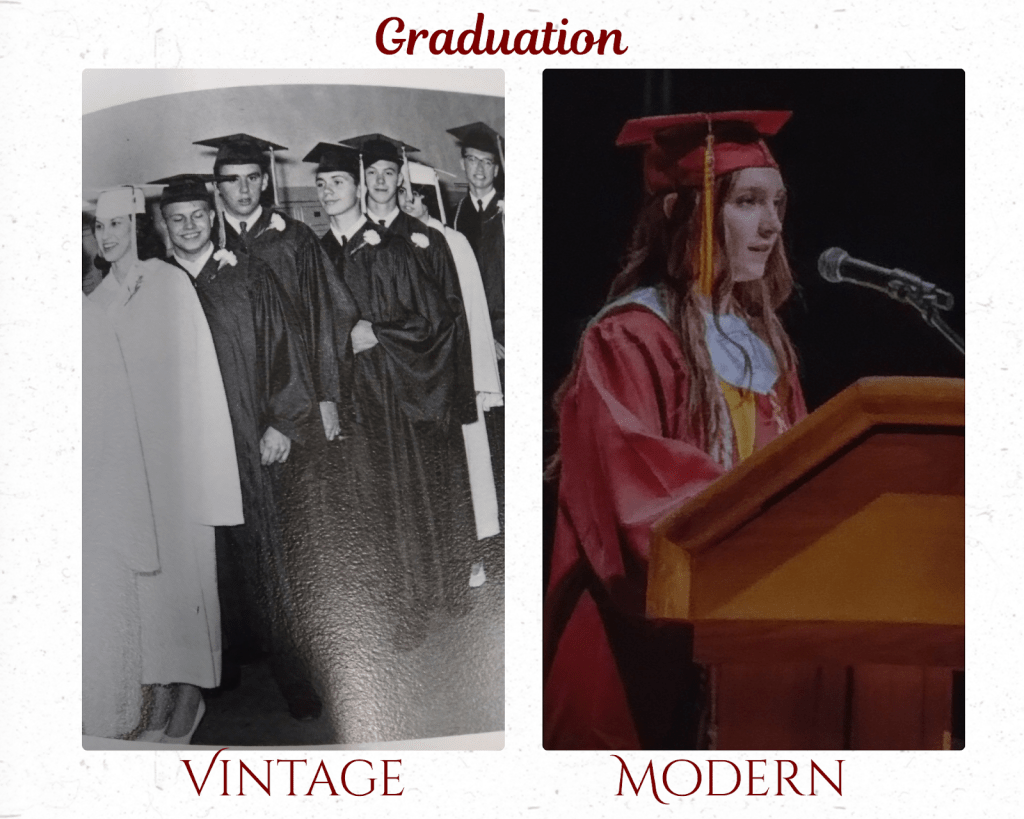
By: Emma Wood
In 1950, five rural townships made a critical decision that would permanently reshape their communities: They gave up their local high schools and joined together to create one, which is now known today as Southeast High School. While some parents resisted the loss of their town schools at first, the students who walked the new hallways would become the first generation to turn consolidation into the community we now know and love today.
Consolidation and the Political Push
While most initially believe that in 1948 the five townships surrounding Palmyra began to talk about consolidation because of money and the number of students, that is not entirely true. One of the big pushes for consolidation was because of political pressure from the State of Ohio.
Many states post World War II decided to push rural districts to consolidate. Smaller township schools were financially strained, and new academic standards from Ohio and the Federal Government needed schools and programs that would have to have official, government funding. It is easier for the state to fund one consolidated school for these reasons, than multiple different schools around the same area.
At this time, December 1948, county officials first approved this merger of the Palmyra, Deerfield, and Paris school districts, noting the plan would allow the new district to “provide a complete program of subjects offering as well as extracurricular events” (newspaper from the Deerfield Historical Society). But… the public was not happy. Within weeks, petitions signed by more than 51% of voters forced the board to get rid of the merger proposal.
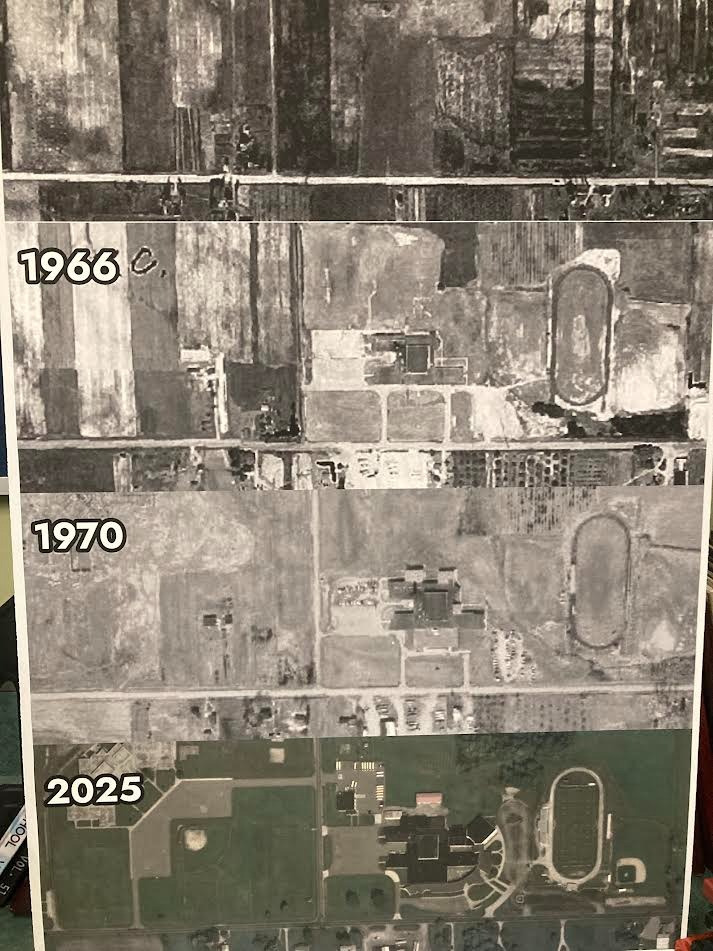
The debate revealed a tension between local control and state influence. Some parents feared longer bus rides and higher taxes, while others worried about losing the identity of their town schools. According to a later retrospective, residents rallied to protest, with some arguing the community already had a “fine building” and should not be forced to merge.
Mrs. Linda Dillon explained that the state’s involvement ultimately changed everything.
“The consensus, from the state, was to put some of the schools together and consolidate… Kent State University was asked to do a feasibility study on those ideas and projected growth of the areas.”
The issue became more urgent when the state began threatening accreditation. By 1950, several township high schools were warned their charters would not be renewed unless facilities improved. As Dillon noted, “…the state… sent notification… that their certificates allowing them a license to have a school would no longer be given. So it kind of forced them to consolidate”.
Economic changes also played a role. The creation of the Ravenna Arsenal during World War II removed thousands of acres from the tax rolls, while the Berlin Reservoir displaced families and reduced enrollment. With shrinking funds and rising standards, consolidation became unavoidable.
On April 20, 1950, after months of meetings and negotiations, the merger of Charlestown, Palmyra, Paris, Deerfield, and Edinburgh officially became law. One newspaper reported the decision was expected to make schools “operate more efficiently and provide the pupils with a better, more extensive course of study.”
This tension reflected a larger national conversation of the 1950s: the balance between local control and statewide modernization. Across the country, communities debated whether progress required giving up long-standing traditions. In Southeast’s case, consolidation forced five proud townships to redefine what “community” meant.
Building School Spirit in a Turbulent Era
As Southeast grew, so did the unification of the students. School spirit and the culture that we know today was shaped during one of the most turbulent eras of the United States of America.
I interviewed an early graduate of Southeast, of whom graduated in 1965. His name is Lynn Burkey. He was part of the band, which at this time had gained recognition for its performances and competitions, drama productions had filled the auditorium, and athletic events brought the entire district together.
These traditions developed at the same time the nation faced some of its most turbulent moments.
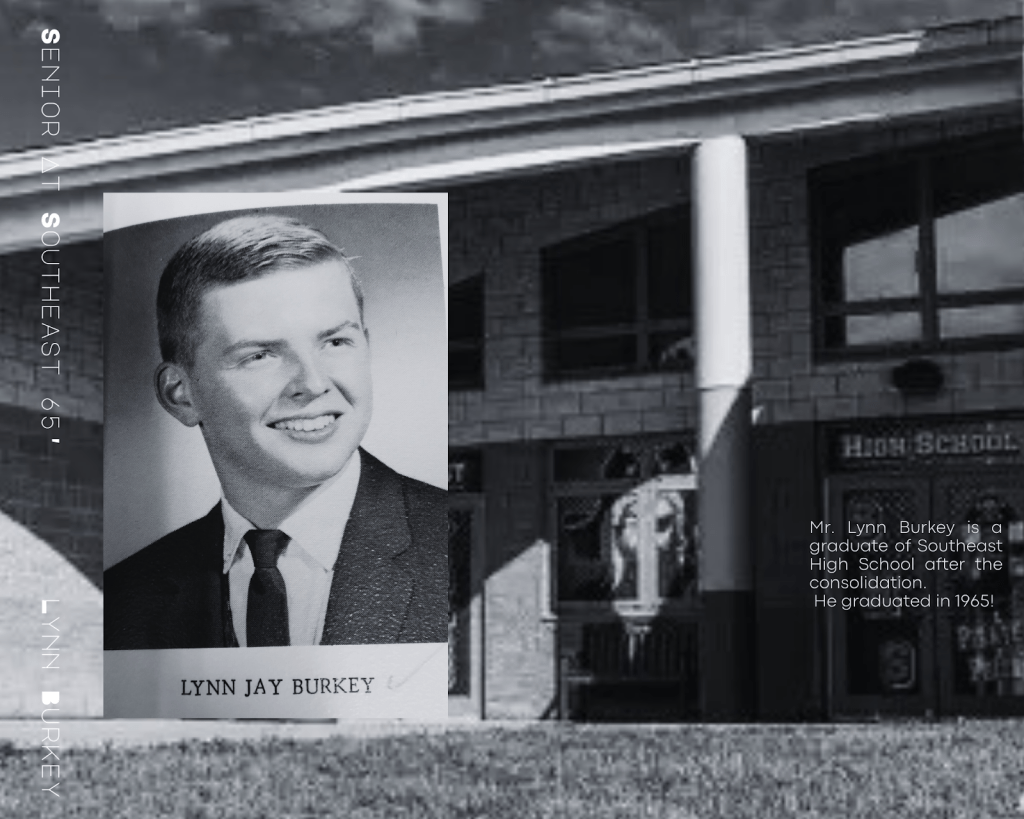
Burkey remembers hearing the news of the assassination of John F. Kennedy during the school day, a moment that stunned classrooms across America, including those at Southeast. He recalled that, “Students would forge the band directors signature on passes and go down to the band room every study hall… there we heard the news about the Kennedy assassination and the room was silent. It was one of the only times I remember that room being silent during a study hall”. Discussions about the Vietnam War also reached students, shaping conversations about the future, service, and national identity.
Despite these uncertainties, school life continued with remarkable consistency. Pep rallies, performances, and community events provided a sense of stability. In many ways, Southeast High School functioned as a steady social anchor during a decade of rapid political and cultural change.
One especially memorable event from the early years was a girls tackle football game held in the 1960s, which filled the stands and became a symbol of the school’s growing unity and enthusiasm. Moments like this helped transform a newly consolidated student body into a cohesive, spirited community.
Why This History Matters to Southeast Students Today
We today walk the same halls that thousands of kids have walked before, we walk the same halls that were built from political compromise, that were shaped by social change, and strengthened through a multitude of hard experiences. Understanding this history today is essential to understand Southeast’s unique identity.
Dillon emphasized that the district’s history is closely tied to political decisions about public education and funding. She believes that understanding this past helps students advocate for the future of their schools.
“As in all history, we are supposed to learn from it and do better… using it to create ideas and give us support for new initiatives.”
Principal Sigworth agrees that remembering the district’s origins helps students appreciate its unique identity.
“We have kids good at everything — band, sports, drama, clubs. That culture of participation really came from bringing five communities together.”
Burkey also agreed with this point, stating that history oftentimes repeats, and students must know the past in order to make amends to create a better present and future.
Understanding that history reminds students that Southeast was not always one unified school. It became one through cooperation, resilience, and the belief that education could bring communities together. It teaches us that the same problems we had years ago are still found today and how to fix them or not repeat mistakes.
 The Pirate Post