
By Abi Lenze
As Homecoming approaches, there has been an increase of students publicly asking one another to the dance at sporting events, at school, or at one of their homes. These “homecoming proposals” are unnecessary, expensive, and create more stress than is needed for the task at hand.
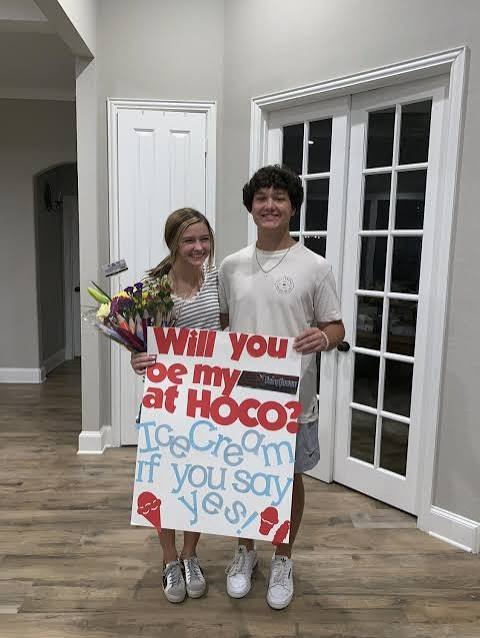
Asking someone to a dance should not require a poster, flowers, or an audience. Simply saying “Do you want to go to homecoming with me?” with a yes or no response is enough. In most cases, the two people have already established that they are dating, or at least talking by the time of the proposal. They already have plans arranged to attend the dance together, so fabricating a big proposal is unnecessary.
Homecoming proposals can also put a ridiculous amount of pressure on the person being asked. You are often surrounded by friends, being recorded, and face-to-face with a poster that you know took both time and money to create. Peer pressure is embedded in a public proposal, which makes saying no very hard.
There is also pressure on the person making the sign to get it right, with many signs having a cheesy message like “I can’t bear to go to homecoming without you”. The proposal is expected to be creative, original, and heartfelt: living up to these expectations can be a difficult feat.
Trend encourages people to compete with each other. One person brings flowers, so the next person needs to bring flowers and a stuffed animal. Then the next person needs to do something more extravagant to make the person receiving the sign feel important. A poster by itself is usually not enough anymore, requiring high schoolers to spend at least $20 if not more on these proposals. Girls have also begun to expect these posters, rather than be appreciative of receiving them.
Asking someone to Homecoming, even with a poster, can be an overall positive exchange between two students. Due to increasingly high expectations placed on both parties however, it has quickly turned into something to brag about rather than a heartfelt ask. It begs the question of whether students continue the trend because they want to, or if it’s because they feel like they have to.

