
BRUSHSTROKES AND BALLADS
{Southeast’s Night of the Arts as an Experience}
By Emma Wood
Every day Southeast goes through the same mundane, repetitive tasks: get to school, the bells ring, go to your locker, go to class, observe the quiet steps of those in the hallway, and then repeat.
However, there is one day out of the school year that starts to break this mold, a day that shows that even the most monotonous and tedious tasks sometimes can make… art.
Night of the Arts is that day.
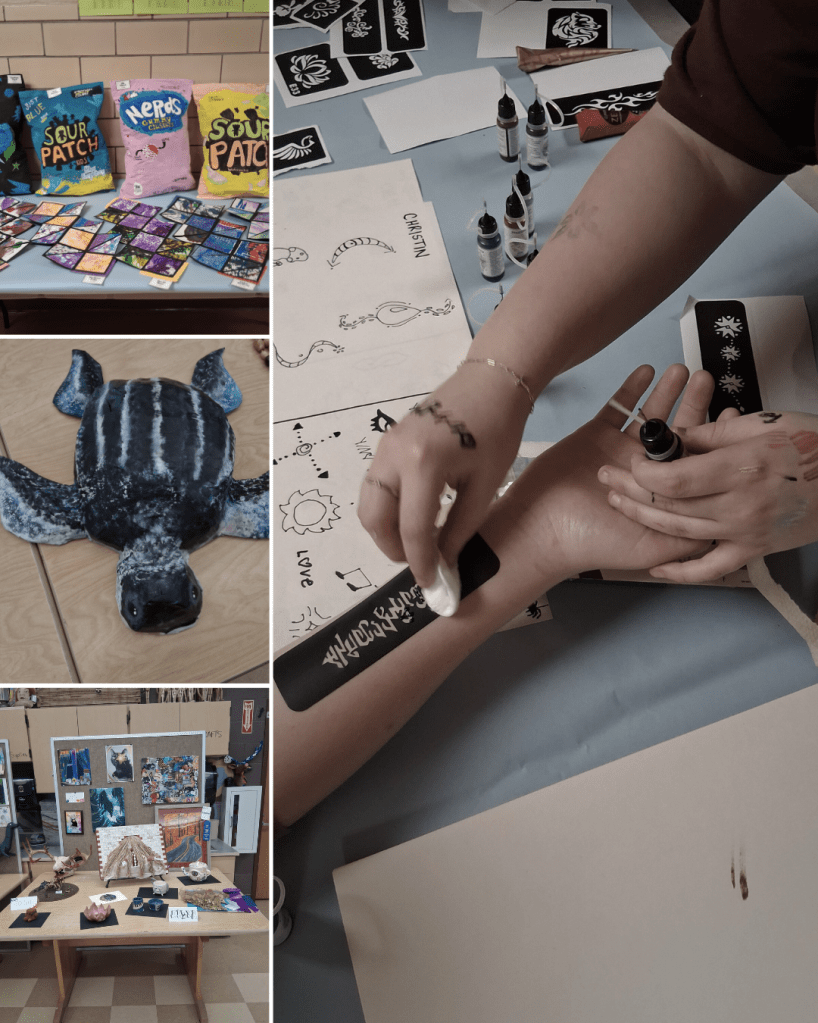
The moment you walk into the door, the school seems… different. The walls, usually just part of the background, become a gallery. Artwork lines the hallways; from paintings, sketches, sculptures, each piece holding a fragment of someone’s imagination. It is not just decoration; it is expression made visible. Each piece of artwork is expertly chosen, meticulously picked, and hung up with such delicacy it is purely amazing.
Art teacher Amber Schuch explains that the displays at Night of the Arts is intentional and inclusive, sharing that for each project, anywhere from ten to twenty-five pieces may be selected, with the goal of making sure every student in an art class is represented at least once. The event itself typically spans grades K–12, though this year focuses on middle and high school. “One of the most meaningful features,” she notes, “…is the senior spotlight: advanced students curate a personal display of their work from across their entire school career, showing growth from elementary sketches to their most recent creations.”
But beyond the visual beauty, Night of the Arts serves a deeper purpose. “Getting art out in the community is always good,” Schuch says, noting that the event helps break the misconception that artistic ability is something people are simply born with or have to train super hard to gain. More importantly, it gives students a moment of recognition. Hearing someone stop and admire their work, realizing it is their own, creates a sense of pride that cannot be replicated in the classroom. At the same time, the event strengthens community support, something essential for keeping art programs alive and valued within schools. With the recent dropping of certain art programs throughout schools, community respect and understanding are essential now more than ever.
There are more than just the physical and creative arts; there are the musical arts as well. As the evening begins, the soundscape shifts. The distant tuning of instruments echoes through the school, blending with the low murmur of conversation. Students from elementary school to high school prepare to perform. There is something powerful about that range, so many ages, all connected by the same act of creating. Each grade at different points in their choral and musician journey… all different voices, or different tones behind each instrument.
It is a cacophony of sounds, a blend of art, an experience that nobody should miss. That is what Night of the Arts is. The performances themselves feel like a conversation without words. Choir voices rise and fall together, filling the space with something almost tangible. The bands follow, each note precise yet alive, carrying energy through the room. And as you walk away from the music, from the liveliness of the gym, or the fantastic spaghetti they serve in the auditorium, your eyes and senses are bombarded with amazing artwork lining all the halls and display cases.
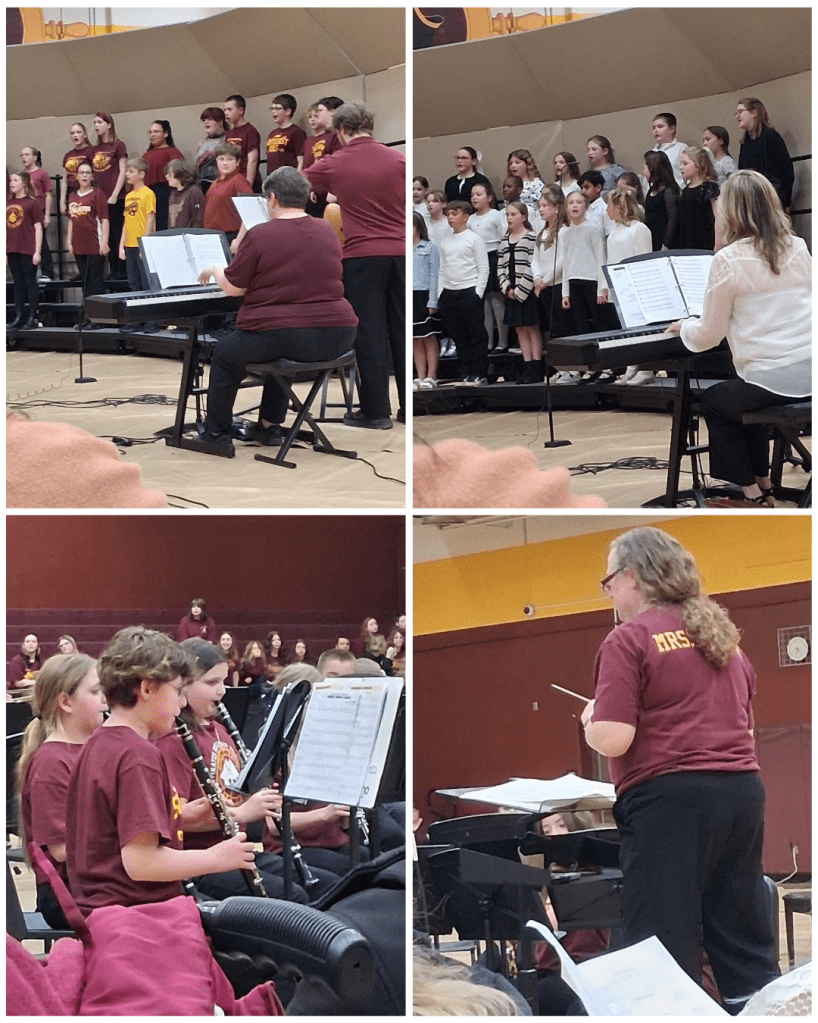
For many parents, this experience is just as meaningful as it is for the students. Nicole Root, whose daughter participates in choir, shared that while she loves watching her daughter perform, her favorite part of the evening is actually the band, drawn to the energy and power of the instrumental performances. Robin Tittle, who is involved with the art department and has a daughter in art club, finds herself captivated by the interactive and detailed displays, especially the 3D candy bags and the live sketch pieces that invite viewers to guess the identity of the subject. These moments of curiosity and engagement turn the evening into something more than observation: it becomes participation.
Throughout the night, all your senses begin to interplay. Dinner is something you can taste. You can smell the food, the perfumes, the distinct smell of paint and clay as you walk into the art room. You can hear all the amazing music and the blending of notes. You can see all the colors and vibrancy along the halls. And you will experience art that is so palpable you could touch it. That is the point of Night of the Arts. To show people that the arts are essential to humanity, that it is the culmination of all your human senses, a gathering of everything you believe in all at once.
What makes the Night of the Arts special is not just the talent on display, though there is plenty of it. It is the way the entire school transforms. Creativity is no longer confined to a classroom or a stage, it fills every corner, every hallway, every conversation.
For one night, the arts are not just something we study in school, in an unvaried, mind-numbing way. They are something we live, something we sense, and something we find essential to our wellbeing as a member in our community.
DIAMOND DOMINANCE: PIRATES SOFTBALL READY TO SHINE
By: Caden Dillon
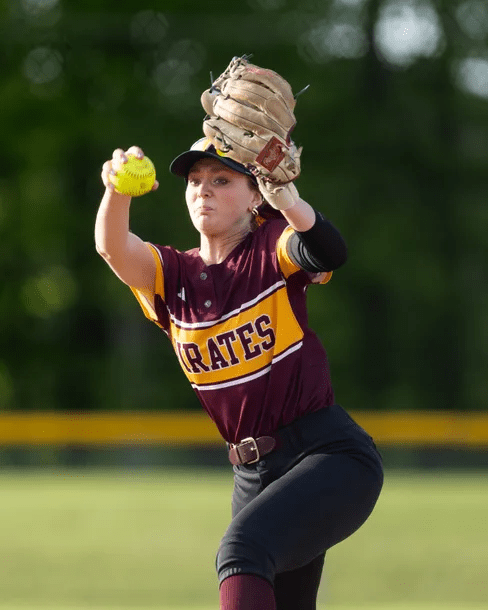
The winter snow is melting, and Southeast fans are excited to get outdoors for some spring sports. From track to lacrosse to softball/baseball, the spring seasons are gearing up for competition, and our Lady Pirates are ready to be back in action. These girls are coming off a winning 2025 season with a record of 16-9. The roster for the team consists of: (Seniors) Olivia Bragg, Morgan Muncy, Bailey Morris, Jenna King; (Juniors) Angel Cottrill, Alexis Hurd, Savannah Powell, Renee Sutliff, Miranda Timko, Neena Truex; (Sophomores) Natalie Campbell, Lily Hayes, Kylee Holcomb, Lylia Lavigna, Leah Mesaros, Bella Mowery, Angelina Pellegrini, Aubrey Petrilla, Anastasia Sutliff; (Freshman) Zoie Brooks, Kirsten Harvey, Lauren Metzgar, Elliana Powell, Evie Sherry, Addi Shinsky, Hanna Wheeler, and Skyla Zeigler; (Coaches) Erin Muncy, Ashley Callahan, and Heather Lindsey.
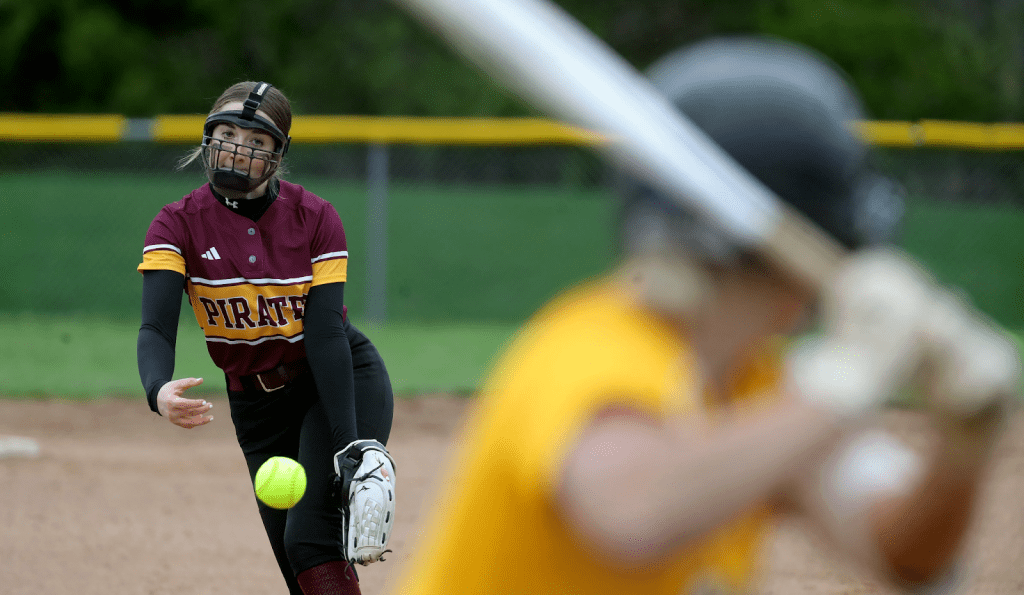
Southeast will have strong leadership this season with four returning seniors and six juniors. First team all-Ohio senior Morgan Muncy shared the following about the upcoming season, “My goals for this season are to win the league and win a few tournament games. We just want to compete in every game and keep high energy.” She feels that this can be accomplished when the “…team has good chemistry, to go along with pitching and defense.” The two teams that she’s excited to play this year are Champion and Labrae due to the tough competition. The girls’ play tonight at Rootstown at 5:15. Wishing them an awesome season. Go Pirates!
WIRED FOR WAR: BOYS LACROSSE
Bradley Dillon & Tyler Shaw
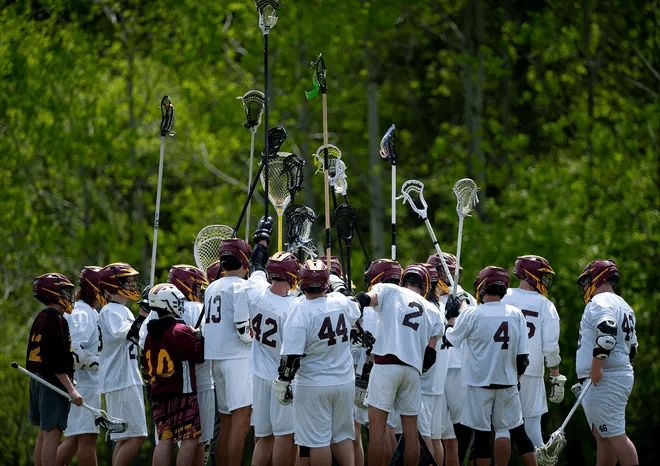
Lacrosse is one of the fastest growing sports in the world, and some schools in Portage County are starting to add lacrosse programs to their athletics; only 3 schools in Portage county have lacrosse, including Southeast. The Southeast boys lacrosse team is coming off an 8-10 record. They play their third game on March 26th against Canfield. The Pirates have an extensive roster this year and are quickly trying to figure out the roles and responsibilities. Some notable upperclassmen are Abdallah Alrawahneh, Tristan Finch, and Trevor Osbourne, with some standout underclassmen like Jackson Oyster, Joey Jares, and Nick Coffman. This year’s squad is also coached by Karl Mesaros and Brady Deremer. The Pirates are trying to build off of last year’s season to improve to a winning record for the 25-26 season. We interviewed up-and-coming freshman Joey Jares a few questions about the season ahead, and he has a few goals in mind. One of his main goals is to “Get not only the team’s offense but the team’s defense sharp and ready to go for the season.” Every player on the team loves the game of lacrosse, and all players have many favorite parts about the game. Jares’ favorite part of Lacrosse is, “Playing defense and being able to hang out with my friends during practice and being around the team and coaches.” The Pirates lacrosse team has a lot of new players to watch this season, and exciting things are sure to be on the way for the Pirates.
NEW SEASON, NEW GOAL: GIRLS LACROSSE IS BACK
By Alaunte Massrock
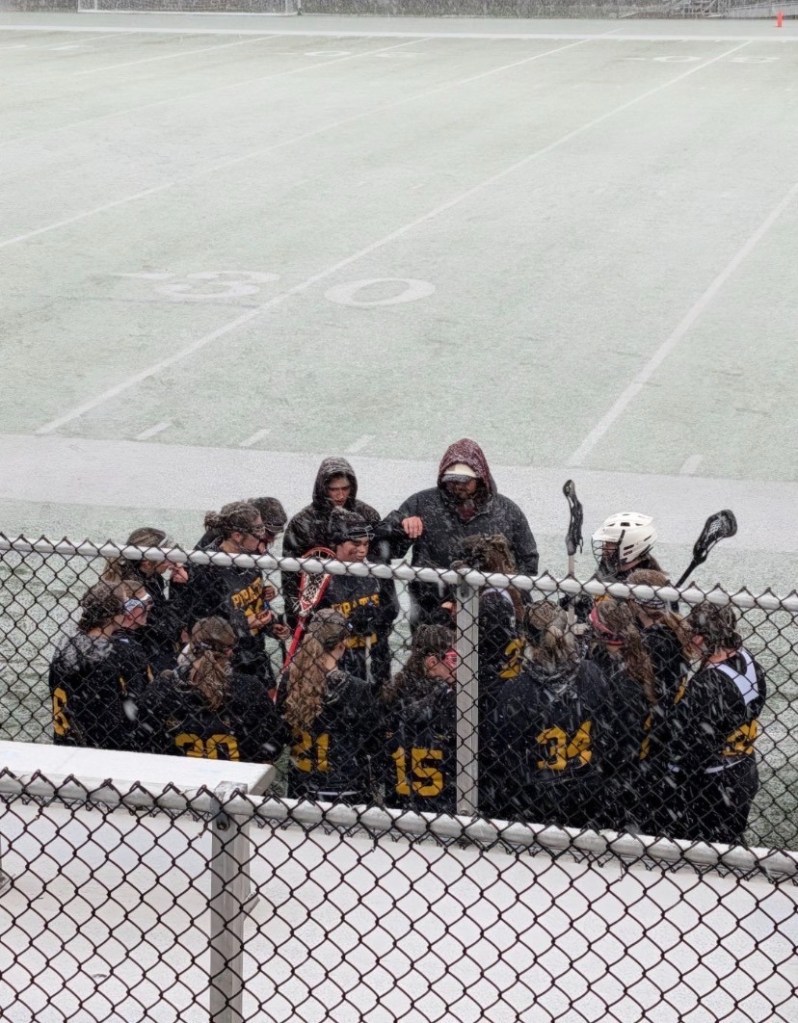
Our girls’ lacrosse team is often overlooked because they play schools that are far away and unfamiliar to our students. The girls’ lacrosse team was 7-7 last year, but many of the schools they played were larger and far away. This puts our girls’ lacrosse team as the “underdog” of their sport. The team is still very young; they only have four upperclassmen compared to their twelve underclassmen. The team captains are sophomore Alexi Richmond, junior Cali McPeak, junior Olivia Dix, and senior Arianna Florentino. Richmond states, “We are definitely taking a big step in our leadership with team captain Cali McPeak”. McPeak contributes to the team with experience and initiative.
The team has been focusing on learning a new defensive strategy, as last year they ran a man defense. They are switching zones in hopes of improving their record. The team shows promise with new players entering high school, better chemistry among their team, and more experience. They have been focusing on communication on and off the field. To accomplish that, they have been putting in extra work not only in the weight room, but in their practices too. As the season continues, the team hopes to gain momentum and prove that they can win against even the toughest teams on their schedule. With strong leadership, improving chemistry, and a determined mindset, this year’s team has the potential to surprise a lot of people. Good luck to our girls’ team and go Pirates!
SHS SPOTLIGHT
By Leila Evans and Cali McPeak
The heart of Southeast beats through its vibrant student body and the unwavering dedication of its staff. Our school is more than just a building; it is a thriving community made by the unique contributions of every individual. In a community as connected as ours, leadership and spirit are the threads that hold us together. Southeast thrives because of the passionate individuals who go above and beyond to make our hallways feel like home. Today, we take a moment to celebrate the energy, talent, and commitment that defines our school culture. It is our privilege to recognize those who lead by example and inspire their peers to do the same. Among our many dedicated students and hardworking teachers, two individuals have stood out for their exceptional impact on our campus. We are thrilled to shine the spotlight on Abdallah Alrawahneh and Jessica Cavileer for their remarkable contributions.
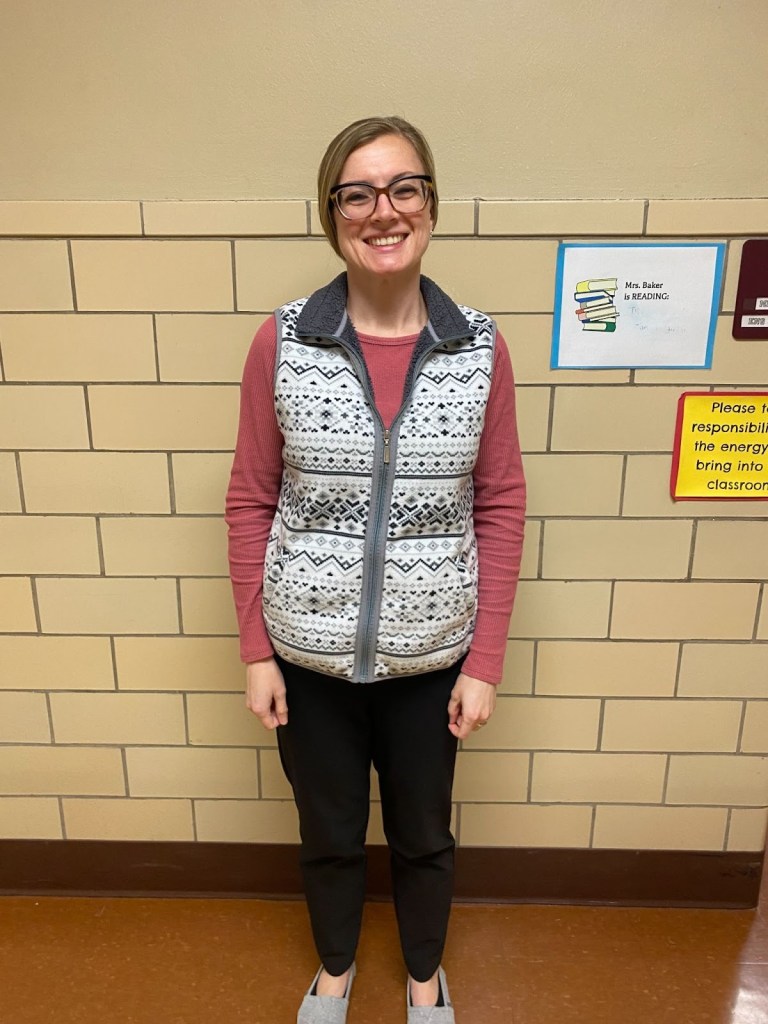
Cavileer makes a safe environment where students feel valued and respected. She works hard to understand students’ difficulties and adapts her teaching methods to meet individual needs. She also shows a deep knowledge and enthusiasm for the subject matter to make lessons engaging. One of Cavileers role models is her 4th grade teacher Mrs. Brewer. Brewer taught her multiple life lessons. Cavileer stated, “At that time, I was more of a perfectionist. She would challenge me to leave things instead of always trying to make sure they were “perfect”. While Mrs. Brewer challenged her students, she also provided the support needed for them to reach their full potential just like how Cavileer is now. Having an important role model taught Cavileer that it was okay to be human and now she teaches her students that it’s okay too.
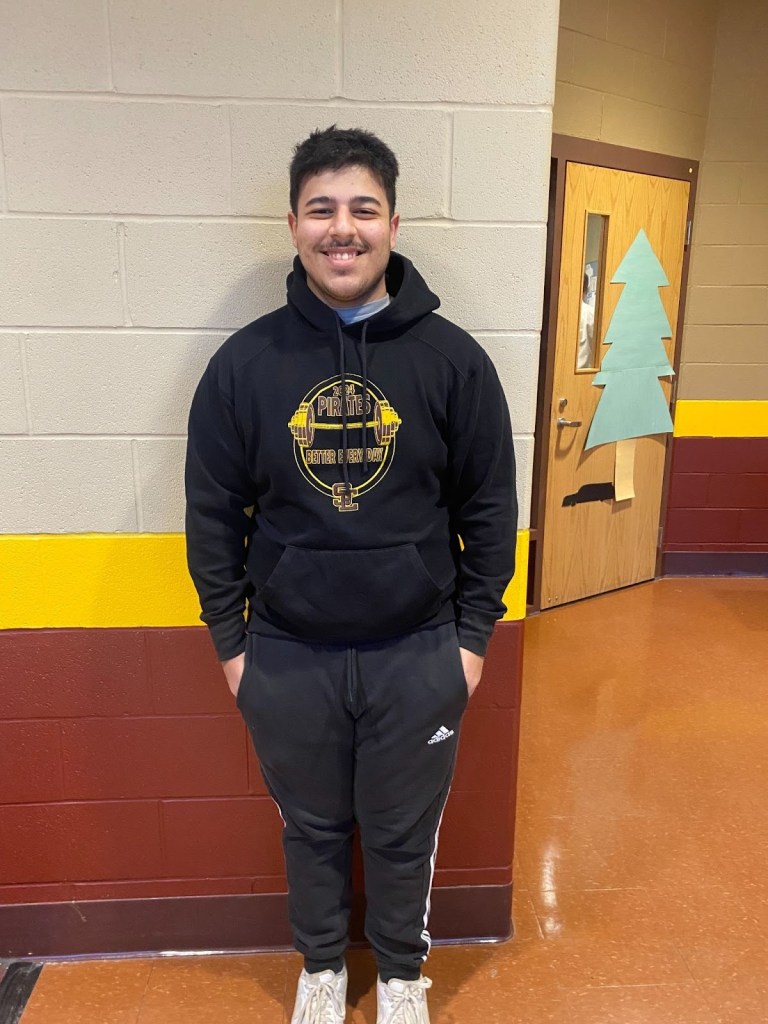
Abdallah Alrawahneh is a senior here at Southeast who is very involved in sports. He participates in football and lacrosse. He is very well known among staff and peers for his kindness and great attitude. The advice that he gives to younger students is to “not take the time for granted.” Your time in high school will fly by, so it is important to cherish every moment. His highlight of this year was beating Newton Falls in his senior year in football. Now, he can be found practicing for lacrosse. His plan after high school is to go to Kent State to become a dentist. We wish him all the best of luck in his future endeavors.
Bringing energy and vibrance to our school is not an easy task. It takes effort from everyone in the building; students, teachers and staff all have to put in the work to bring life to Southeast. Our SHS Spotlight was created to highlight the individuals who stand out and help to bring spirit to our school. You can bring the spirit too by getting involved and making connections with your peers and the staff.
IS IT ETHICALLY RIGHT FOR PARENTS TO TRACK THEIR CHILD’S LOCATION?
By: Garret Davis and Isabelle Goodnite
As technology has advanced, there are now many apps that parents use to track their children’s whereabouts. Whether it’s iSharing, Life360, Family Link, or one of the many others, each of these apps have been used by parents. Many have different opinions on whether or not tracking is ethically right or wrong. Some parents and children see it as a necessity when it comes to safety. While others see it as an invasion of privacy, feeling as if the kids have no freedom.
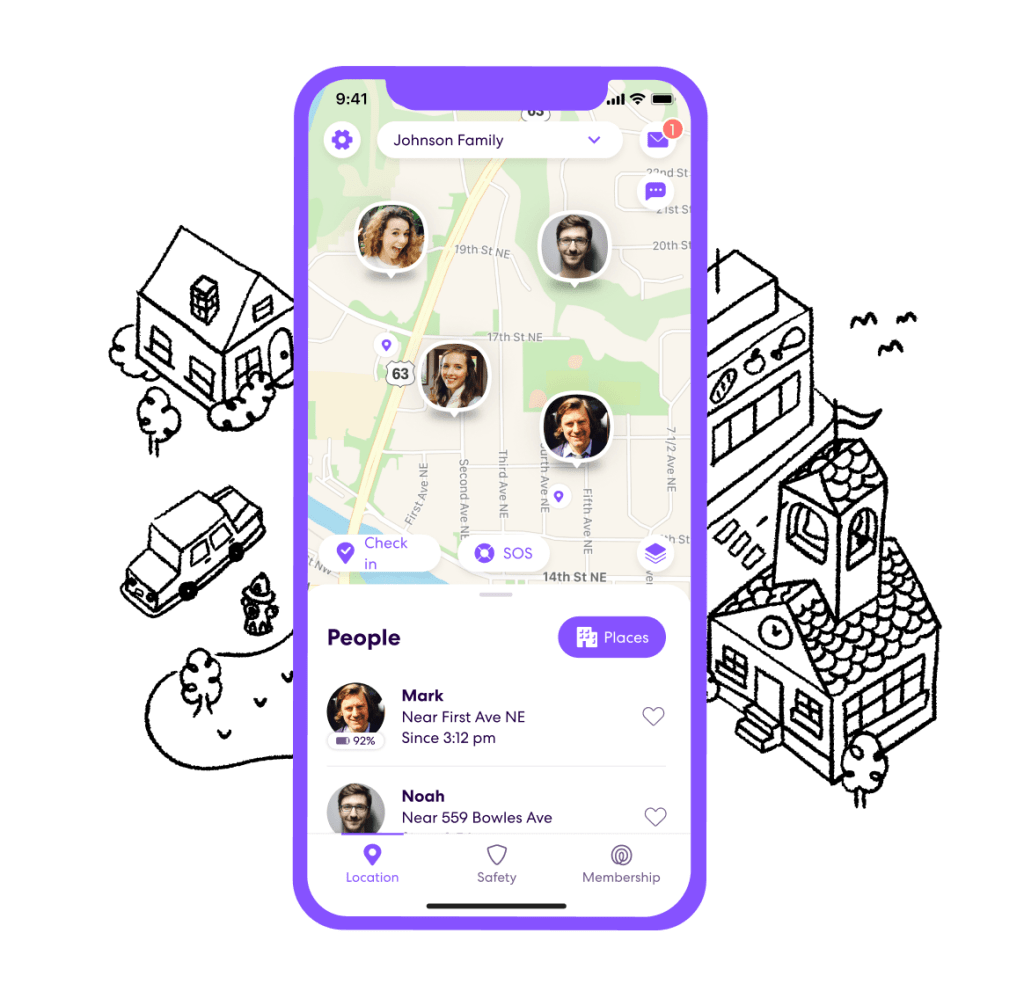
As a parent, tracking your children can feel like a necessity for a variety of reasons. Two of the main reasons consist of a safety precaution and lack of trust. Most parents would say that they do it because of the former, not the later. “I believe it is a less safe world than it was when I was a kid,” said Douglas Craver, teacher at Southeast High School. As a parent with kids in high school, it’s apparent that it can be nerve-wracking not knowing what kind of situations your child could be in. Around 16-years old is the normal age that kids begin to get their license and start driving. It is statistically proven that “roughly 1 in 5 teens (20%) will have a car crash or receive a traffic ticket within their first year of driving” by the National Institutes of Health. Some tracking apps have alerts that serve as a crash detection and will immediately notify the parent’s phone; other tracking apps will show where the location paused in the event of a crash. This can be helpful to the parents when it comes to their child’s safety while driving. Some apps also show the speed at which the person is driving. This will help parents teach their kids to avoid speeding violations and car accidents. Some apps also have a button you can press to alert your parents if you’re in a situation where you might need help. While this can come in handy for serious situations, it doesn’t change the way it makes some kids feel.
As a kid with a parent/guardian who tracks your location, it can feel like you’re being stalked. Korbin Klatka, a junior at Southeast High School, shared that parents/guardians should put trust in their children instead of feeling the need to track them. If parents don’t put trust in their kids, how are they supposed to grow to be responsible? As kids grow, they want space and freedom, the tracking limits both, leading to parents and kids’ relationships turning bitter. The apps for tracking can ruin the relationship between families as it sometimes gives false whereabouts and change locations, leading to parents not trusting their kids. Klatka believes kids are going to do what they want regardless of what their parents say. This lack of trust might make kids feel like they have to try to be sneaky because their parents won’t allow them to have a sense of freedom. Freedom is important for young adults; without some independence, they are more likely to rebel against rules. Parents need to communicate with their children to develop safety precautions that work ideally for their family.
BRIDGING CULTURES THROUGH FOREIGN EXCHANGE
By: Ava Lenze & Abi Lenze

Every year, Southeast High School invites students from other countries to live with a host family in our district and experience American culture. This year that person is Hannah Thols, a student from just outside of Munich, Germany. Thols has expressed that there are many differences between life in Germany and life in America, but has made a great effort to connect with the people and lifestyles here.
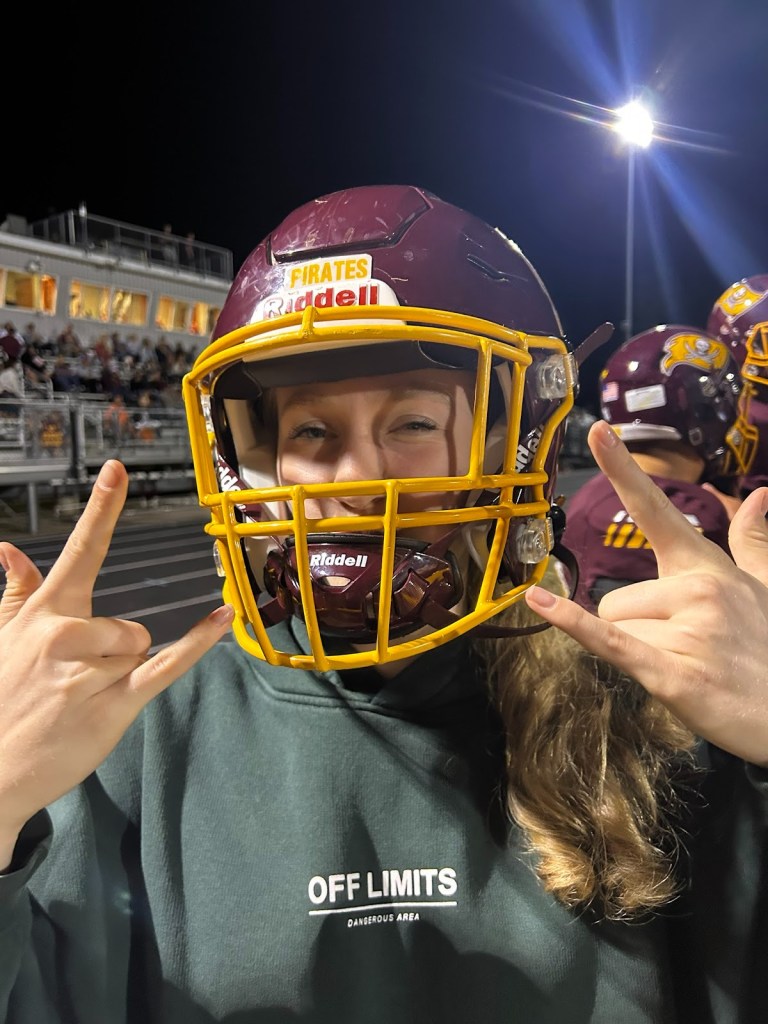
To Thols, a difference between America and Germany is the amount of time students spend at school. Besides the typical academic day lasting seven hours compared to the five hours in Germany, she believes, “You guys enjoy spending more time at school. I feel like everything is at school”. School-sanctioned events, like sports games, theatre performances, and clubs, are incredibly popular among our students. Almost every day, students stay between one and four hours after school to attend these events. When it comes to watching sports at the school, basketball and football both have incredibly immersive student sections, following themes and making chants to show support for our teams. Germany’s sports are outside of school, and many students belong to a sport’s club. Due to the separation of sports and school, students do not get the opportunity to experience a student section, homecoming games, or senior nights with their sport teams. Thols has experienced this firsthand, playing basketball in both countries, as well as playing volleyball and running track in America.

Outside of school, Thols’ host family and agency has made an effort to help her explore the United States by going on frequent trips. Her family has taken her to Miami, and her agency has taken her to New York, Cincinnati, and to see Niagara Falls. In comparison while in Germany, Thols’ friends and family are able to spend time in other countries during breaks. For them, a once and a lifetime opportunity of seeing another country is like seeing another state for most students in America. Living close to Munich has allowed her and her friends to visit Octoberfest, and travel into the city on various forms of public transportation to spend time together over weekends.
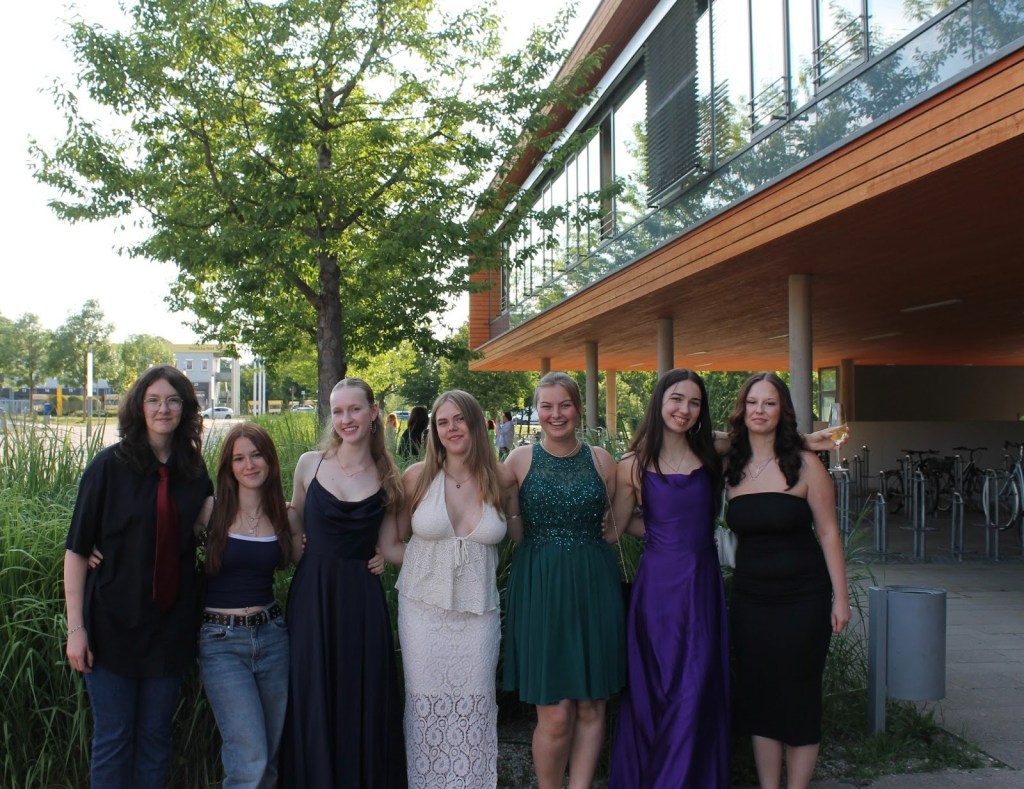
The differences between peer hangouts largely strive from the different age requirements in America compared to Germany. In America, teenagers can begin their driving at fifteen and a half with a temporary permit, and drive on their own at 16; however, people in Germany do not start driving until 18. This is largely due to the difference in terrain. Many cities in Germany boast about their extensive public transportation system, so teens do not have a strong need to be able to drive their own cars. Ohio and many other American states do not share these forms of public transportation, with massive fields covering space between cities, and sometimes even separating towns. Rural areas are incredibly common, and Southeast happens to fall in one of these areas. The impact this has on students is described by Thols–“I would say the kids grow up faster, because they can drive earlier, they can work earlier, and they can build their own life earlier”.
The Foreign Exchange Program is incredibly important, especially in a school lacking diversity as much as Southeast. This program gives both the students from abroad and the students in America a chance to interact with people from other cultures. Foreign exchange students provide a crucial connection to the lifestyles and traditions of other countries.
MEET OUR CREW
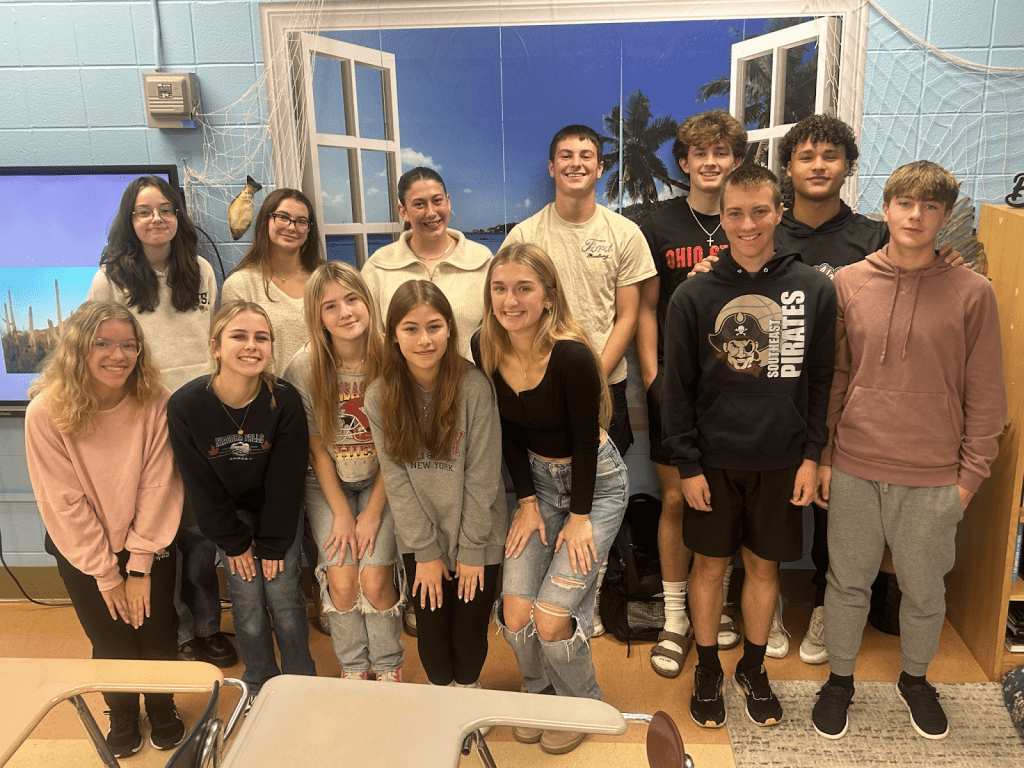
Writers:
Abi Lenze, Ava Lenze, Cali McPeak, Alexis Crum, Emma Wood, Jocelyn Nowak, Isabelle Goodnite, Bradley Dillon, Caden Dillon, Tyler Shaw, Garret Davis, Alaunte Massrock
Pictures:
Photographer: Kristen Dillon
Editors:
Kristen Dillon, Jocelyn Nowak, Mrs. Dillon
 The Pirate Post