
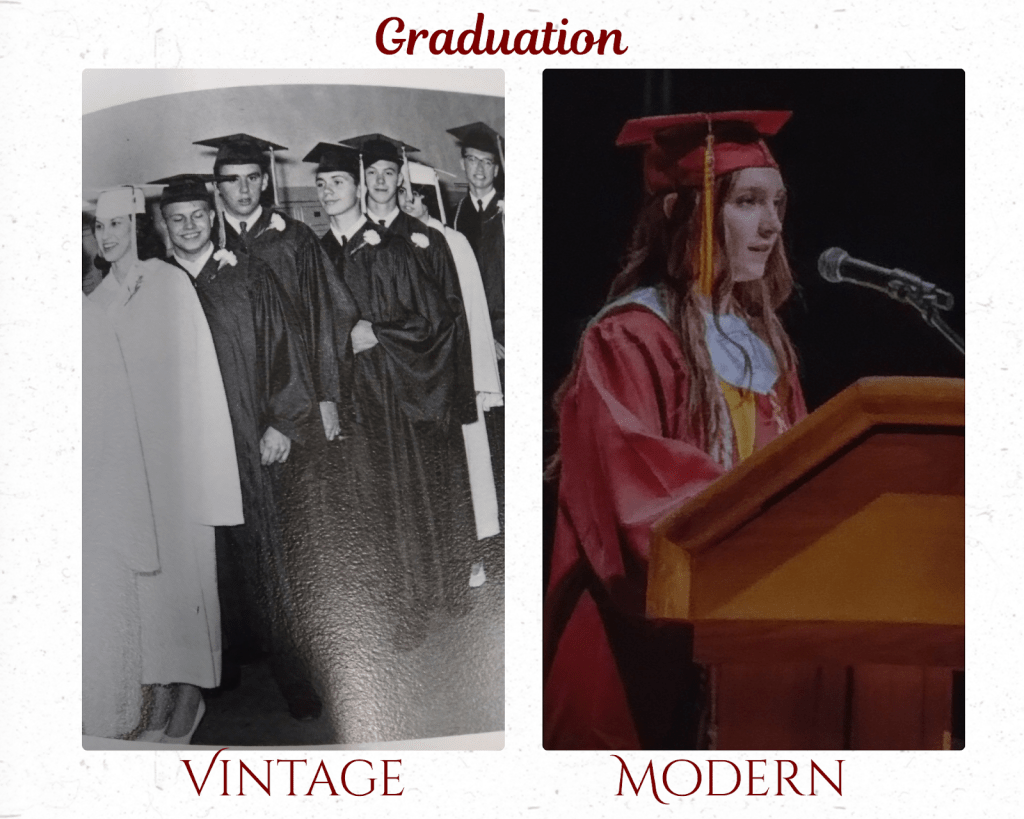
FIVE TOWNSHIPS, ONE SCHOOL: THE CREATION OF SOUTHEAST HIGH SCHOOL
By: Emma Wood
In 1950, five rural townships made a critical decision that would permanently reshape their communities: They gave up their local high schools and joined together to create one, which is now known today as Southeast High School. While some parents resisted the loss of their town schools at first, the students who walked the new hallways would become the first generation to turn consolidation into the community we now know and love today.
Consolidation and the Political Push
While most initially believe that in 1948 the five townships surrounding Palmyra began to talk about consolidation because of money and the number of students, that is not entirely true. One of the big pushes for consolidation was because of political pressure from the State of Ohio.
Many states post World War II decided to push rural districts to consolidate. Smaller township schools were financially strained, and new academic standards from Ohio and the Federal Government needed schools and programs that would have to have official, government funding. It is easier for the state to fund one consolidated school for these reasons, than multiple different schools around the same area.
At this time, December 1948, county officials first approved this merger of the Palmyra, Deerfield, and Paris school districts, noting the plan would allow the new district to “provide a complete program of subjects offering as well as extracurricular events” (newspaper from the Deerfield Historical Society). But… the public was not happy. Within weeks, petitions signed by more than 51% of voters forced the board to get rid of the merger proposal.
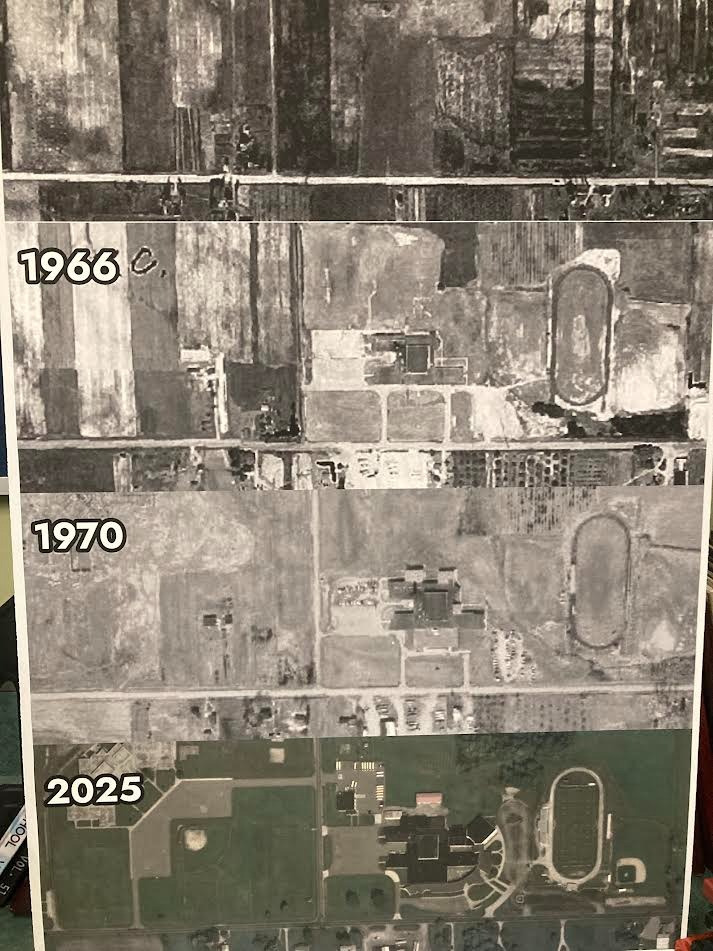
The debate revealed a tension between local control and state influence. Some parents feared longer bus rides and higher taxes, while others worried about losing the identity of their town schools. According to a later retrospective, residents rallied to protest, with some arguing the community already had a “fine building” and should not be forced to merge.
Mrs. Linda Dillon explained that the state’s involvement ultimately changed everything.
“The consensus, from the state, was to put some of the schools together and consolidate… Kent State University was asked to do a feasibility study on those ideas and projected growth of the areas.”
The issue became more urgent when the state began threatening accreditation. By 1950, several township high schools were warned their charters would not be renewed unless facilities improved. As Dillon noted, “…the state… sent notification… that their certificates allowing them a license to have a school would no longer be given. So it kind of forced them to consolidate”.
Economic changes also played a role. The creation of the Ravenna Arsenal during World War II removed thousands of acres from the tax rolls, while the Berlin Reservoir displaced families and reduced enrollment. With shrinking funds and rising standards, consolidation became unavoidable.
On April 20, 1950, after months of meetings and negotiations, the merger of Charlestown, Palmyra, Paris, Deerfield, and Edinburgh officially became law. One newspaper reported the decision was expected to make schools “operate more efficiently and provide the pupils with a better, more extensive course of study.”
This tension reflected a larger national conversation of the 1950s: the balance between local control and statewide modernization. Across the country, communities debated whether progress required giving up long-standing traditions. In Southeast’s case, consolidation forced five proud townships to redefine what “community” meant.
Building School Spirit in a Turbulent Era
As Southeast grew, so did the unification of the students. School spirit and the culture that we know today was shaped during one of the most turbulent eras of the United States of America.
I interviewed an early graduate of Southeast, of whom graduated in 1965. His name is Lynn Burkey. He was part of the band, which at this time had gained recognition for its performances and competitions, drama productions had filled the auditorium, and athletic events brought the entire district together.
These traditions developed at the same time the nation faced some of its most turbulent moments.
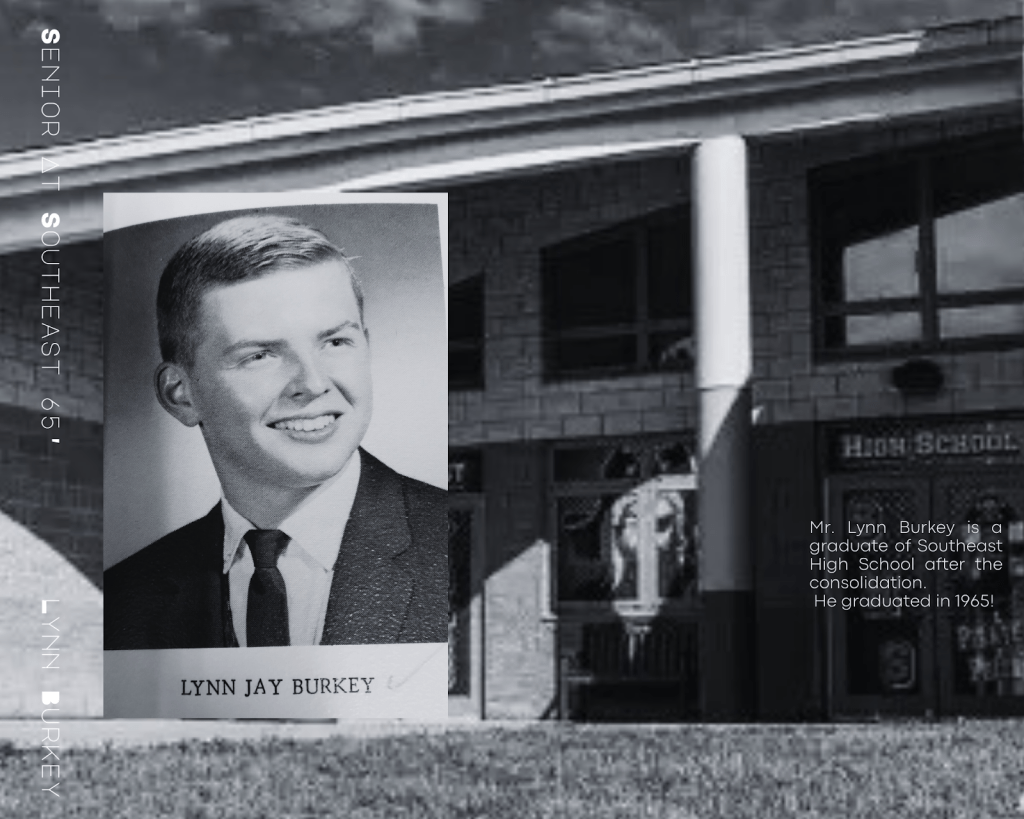
Burkey remembers hearing the news of the assassination of John F. Kennedy during the school day, a moment that stunned classrooms across America, including those at Southeast. He recalled that, “Students would forge the band directors signature on passes and go down to the band room every study hall… there we heard the news about the Kennedy assassination and the room was silent. It was one of the only times I remember that room being silent during a study hall”. Discussions about the Vietnam War also reached students, shaping conversations about the future, service, and national identity.
Despite these uncertainties, school life continued with remarkable consistency. Pep rallies, performances, and community events provided a sense of stability. In many ways, Southeast High School functioned as a steady social anchor during a decade of rapid political and cultural change.
One especially memorable event from the early years was a girls tackle football game held in the 1960s, which filled the stands and became a symbol of the school’s growing unity and enthusiasm. Moments like this helped transform a newly consolidated student body into a cohesive, spirited community.
Why This History Matters to Southeast Students Today
We today walk the same halls that thousands of kids have walked before, we walk the same halls that were built from political compromise, that were shaped by social change, and strengthened through a multitude of hard experiences. Understanding this history today is essential to understand Southeast’s unique identity.
Dillon emphasized that the district’s history is closely tied to political decisions about public education and funding. She believes that understanding this past helps students advocate for the future of their schools.
“As in all history, we are supposed to learn from it and do better… using it to create ideas and give us support for new initiatives.”
Principal Sigworth agrees that remembering the district’s origins helps students appreciate its unique identity.
“We have kids good at everything — band, sports, drama, clubs. That culture of participation really came from bringing five communities together.”
Burkey also agreed with this point, stating that history oftentimes repeats, and students must know the past in order to make amends to create a better present and future.
Understanding that history reminds students that Southeast was not always one unified school. It became one through cooperation, resilience, and the belief that education could bring communities together. It teaches us that the same problems we had years ago are still found today and how to fix them or not repeat mistakes.
FROM GRIND TO GLORY: LEAGUE CHAMPIONS
By: Alaunté Massrock
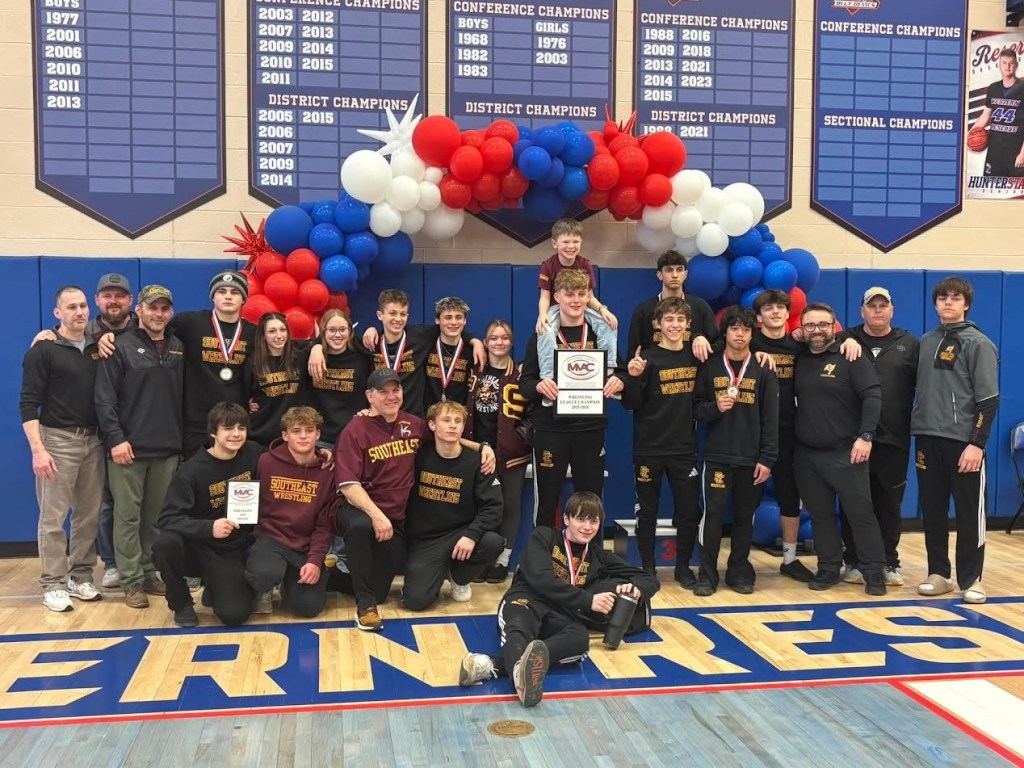
Southeast wrestling has won both a league and sectional championship, and these don’t seem to be the only major wins in sight. We had eight pirates move on past sectionals: Gavin Cantera, Nick Coffman, Riley Diehl, Landon Durstine, Damian Kemble, Dom Kemble, Natalie Kemble, and Trevor Osborne. The addition of Damian Kemble and Gavin Cantera played an important role in the pirate’s success. Kemble is the ninth ranked 120lb wrestler in division three, he is still a freshman so there is a lot more coming from this young man. Cantera is also a freshman and has been phenomenal for the team this season. He transferred from a powerhouse in division one wrestling and the change has been obvious. His matches have been quick making light work of his opponents. He is very adamant about winning more than just a sectional championship, he is confident in obtaining the state title for himself. Cantera may have wrestled for different schools before but he says “It’s different here, it’s like a family bond between everyone in that room” this really shows why our wrestling program has been so successful in recent years. Many people don’t realize the hard work and dedication that the entire team fights through. They have endured weight cuts, tough losses, long practices, and on top of all that they have been phenomenal students to have within our school. With talent, determination, and a family-like culture driving them forward, the pirates are proving that this league championship and sectional win may only be the beginning for the SHS wrestling program.
STUDENT & STAFF SPOTLIGHT
By: Abi Lenze & Bradley Dillon
This month, we chose to highlight a student and staff member who makes Southeast better every day by uplifting others. Luci Crawford, a freshman at Southeast High School, brings light to every room she enters while still remaining a hard-worker. Lori Walden, one of Southeast High School’s lunch ladies, makes it her mission to make students feel seen, even during something as mundane as getting school lunch.
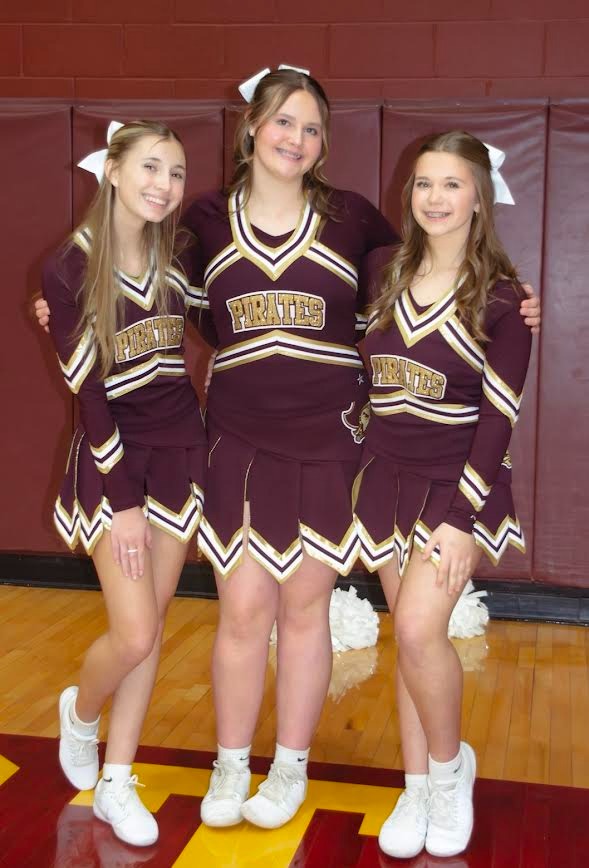
Crawford moved to Ohio from Texas this past summer, over 19 hours away from her friends. She faced this transition with incredible perseverance, immediately joining multiple clubs and sports. Since the school year started, Crawford has participated in tennis, football and basketball cheerleading, SADD, Leos Club, FFA, FCCLA, and FCS. While being thoroughly involved in extra curricular activities, Crawford continues to maintain a 4.0 grade point average and takes multiple classes above her grade level. When asked what her biggest motivator was, she responded simply with “my friends”. Crawford has big goals for after high school, planning to go to college for a bachelors in social science before going to the United Kingdom and getting a degree in political science. She will then return home and work as a foreign affairs officer. Crawford is an incredible example of better every day.
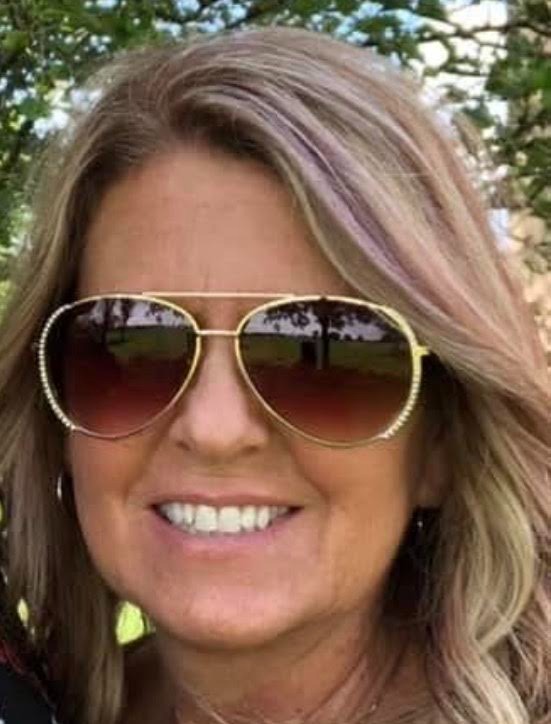
Walden makes it her mission to make students feel welcome and seen when they walk through the lunch line. Her encouraging words and helpful attitude is what’s best about her. Walden attended high school here at Southeast so being a pirate is a part of her blood. It is heartwarming to hear how she continues to be a part of the community. Having worked here since 2007, Walden has invested a lot of time and care into Southeast. She is part of a tight knit culture here. Walden does most of her work behind the scenes, but what she does is as important as any other job. She is the epitome of what SHS staff is about. Walden is just one example of the dedicated staff here at Southeast High School.
Both of these Pirates combine kindness and hard work to create a better environment here at Southeast High School. We appreciate all you do for us, go Pirates
NHS: SHAPING TOMORROW’S LEADERS TODAY
By: Caden Dillon and Leila Evans
The National Honor Society is a high school organization that recognizes students with academic achievement based on four pillars: scholarship, leadership, service and character. To be accepted into the NHS is an accomplishment that students should be striving to achieve. Not only does being a part of the NHS look impressive on college applications, but to get admitted into the club is a feat in itself. The club is led by Christine Anzevino, a math teacher at Southeast High School.

The process to getting accepted into NHS starts with one’s academics, they have to hold a 3.4 GPA or higher to get an application. The next step is to fill out the application: you fill out how many service hours you have (and a description of how you served) and what clubs, sports and activities you are a part of. After this a faculty looks at everyone’s applications and selects the best out of all of them. You need to have good character and leadership skills to get accepted. There’s no amount of students that can be accepted into the club each year, it’s based on what the faculty scores them.
All students should want to be a part of the NHS because it helps set up your future for whatever you want to do. Being a part of this club will look good for colleges and even on work applications. It helps show your leadership and communication skills. NHS also gives out thousands of dollars each year in scholarships. Anzevino states, “Be a leader and know that your character is always being looked at- don’t lie, be on time, be respectful, don’t be a bully, be empathetic to others, don’t cheat, and always do your best.”
TITLE IX: DRESS CODE
By: Tyler Shaw and Cali McPeak
What is Title IX? Title IX is primarily associated with equal access to sports and protection against sexual harassment, its reach extends to all aspects of education, including dress codes. Under Title IX, schools are prohibited from enforcing dress codes in an unfair manner based on gender. This means that girls and boys should be treated equally when it comes to clothing restrictions. Often dress codes commonly affect feminine attire. Shoulder coverage, neckline, and midriff are usual elements in dress codes that have disproportionately affected female students. Dress codes have been also enforced in a way that objectifies and sexualizes female students. The emphasis on modesty and covering up can accidentally send the message that a student’s worth or professionalism is determined by their attire. The sexism within these politics is further evident in the disproportionately disciplined measures applied to female students. They may face disciplinary actions, like suspension or detention, for perceived dress code violations more frequently than their male counterparts, reinforcing harmful stereotypes and fostering an environment where gender-based discrimination is normalized and learning for female students comes second to the comfort of men.

We asked Southeast high school government teacher Monica Kiskadden if she felt that dress codes treated all genders equally she said, “ In many places, dress codes were created to help students not feel anxious about not wearing cool clothes, but I don’t think it is always successful. I have worn a school uniform. It was a men’s polo and men’s khakis. They were not meant to fit women.” This shows that dress codes were not created equally and women have it very poorly. Many young girls have been sent home and taken out of their classes for dress code violations including Kiskadden. “In middle school, I wore a concert t-shirt that my principal did not like. He felt it was too racy!” Nowadays it is almost impossible for a guy to get sent home for something that he wears to school. One main argument for dress codes being a good thing in schools is that it helps keep school appropriate for strictly learning and that nothing is distracting during school hours. Kiskadden says, “Clothes can be distracting, but also allow a student and teacher to express who they are. Clothing can be a great way to break the ice with someone.” Kiskadden has a great argument for this topic because students do need to express themselves.
In conclusion, dress codes, when enforced without nuance, can demonstrate sexist stereotypes and undermine Title IX’s goal of promoting equal opportunities for women. By policing women’s attire more harshly than men’s, schools inadvertently send a message that women’s bodies are inherently disruptive and need to be controlled. This not only stifles self-expression but also reinforces harmful gender norms. To truly uphold Title IX, schools must revisit their dress codes, engaging with students and staff to create policies that promote inclusivity, respect, and equality. By doing so, we can create an environment where women feel empowered to express themselves without fear of judgment or restriction.
ARTIST CORNER
By: Ava Lenze and Garret Davis
When turning the corner by the library have you ever noticed the flashy artwork on the walls? Those art pieces are created by our very own Southeast students, expressing themselves in unique ways that often go unnoticed. Art teacher Amber Schuch’s creative mind and style has created many interesting art projects that have led to the creations of breathtaking pieces. The art section in the halls draws you in with the new crochet and relevant world event projects that catches your attention. When just looking at a piece, more than just viewing comes to mind, every piece has a story and has emotions. When choosing an image to highlight, two of the pieces stood out from the rest; those pieces are by Odyssey Cadle and Matthew Ross.
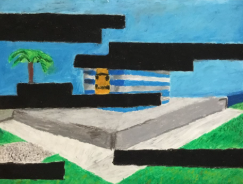
Matthew Ross is a sophomore at Southeast High school and has a hidden talent for art. When given the topic of current events, Ross chose to do his piece on the Epstein files. Ross’s work stood out as in his art he blacked out some of the parts symbolizing the hidden/missing pieces of the files. Ross stated he got his idea after hearing about the Epstein files around school and how popular it is. Ross’s ability to translate a current event into an original, creative piece is remarkable.

Odyssey Cadle is a senior at Southout Highschool, who created a creative piece that is a mix of photography and digital art. Cadle’s piece is a photo of her cat, with the addition of the golden stars, resembling an angelic theme relating to old superstitions behind cats. When finding inspiration for this piece Cadle stated that she found her main ideas in research behind how cats were perceived, “Cats guarded people from spiritual creatures, spirits and demons as well as biblical accurate angles, sort of leaning into it but not entirely, as stars are related to angles”. Her piece is eye-catching and unique as it incorporates styles of art that are often forgotten incorporating a more complex meaning behind her art. Cadle won the “Artist of the Week” program contest sponsored by Blick Art Material. This is a weekly contest that highlights new artwork from all grade levels. When Cadle learned she had won the contest she was surprised and wasn’t expecting to win but Cadle’s dedication to her artwork has shown how much she deserved this win. Schuch wrote “My favorite part about creativity is seeing how each person interprets and creates work based on their own personal interests and experiences.” The art program has continuously shown creativity and imagination in their work as the school year goes on. Every color can draw the viewer in but what often goes unlooked is the meaning behind it. No art piece is the same and each one deserves recognition for the effort and hard work they put in.
THE PIRATE POST GOES SOCIAL
The Pirate Post is excited to announce that we are diving into the social media pool. We are hoping to keep the school and community more connected through our new platforms. Jocelyn Nowak has taken point on creating an all inclusive webpage and Kristen Dillon has bedazzled Instagram and TikTok for The Pirate Post.
Through these forums, we will be bringing:
Sports 🏅
Clubs 🧩
Highlights 🔊
Art & Poetry 🖼️
Holidays 🎆
Entertainment 🎭
Opinion 💬
Please check out our new platforms, and enjoy the inspiring and intriguing news that is happening in the halls of our building. Instagram: SHS Pirate Post TikTok: Webpage link: piratepost.org
MEET OUR CREW
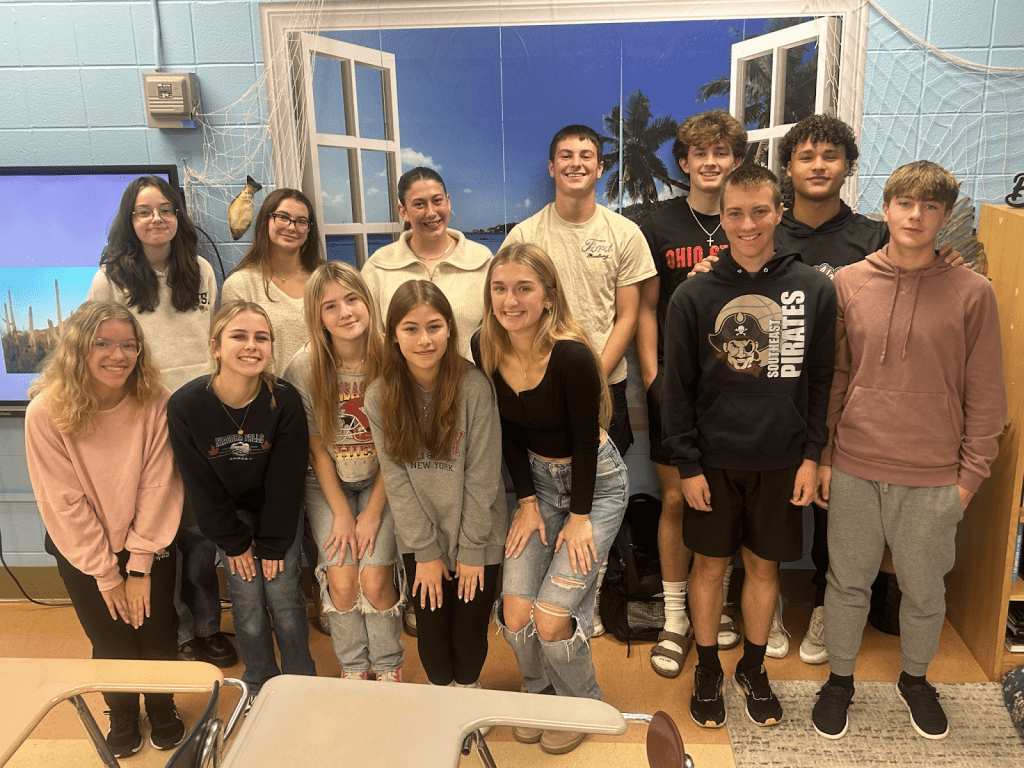
Writers:
Abi Lenze, Ava Lenze, Cali McPeak, Alexis Crum, Emma Wood, Jocelyn Nowak, Isabelle Goodnite, Bradley Dillon, Caden Dillon, Tyler Shaw, Garret Davis, Alaunte Massrock
Pictures:
Photographer: Kristen Dillon
Editors:
Kristen Dillon, Isabelle Goodnite, Jocelyn Nowak, Mrs. Dillon
 The Pirate Post